

Choose a factory, product or supplier starting point
A manufacturer may need to answer several carbon questions at once. Management wants a company baseline. A customer asks for the footprint of a finished component. Procurement wants to understand which materials deserve closer investigation. Start by separating those decisions. For a corporate inventory, agree the reporting organization and sites. For a product study, specify the product, production period, functional or declared unit, and life cycle boundary. For supplier engagement, identify the purchasing categories and the intended use of supplier responses.
Our suggested first workshop brings together the people who own those decisions. Ask each person to describe an output they will actually use: a management report, a customer response, a product model or a prioritized data request. Then record what is outside the assignment. A factory total cannot simply be divided by revenue and presented as every product's footprint. The GHG Protocol Corporate Standard addresses organizational inventories, while its Product Standard addresses product life cycle accounting. The project brief should make that distinction visible.
Turn production records into a usable evidence pack
Begin with records the factory already maintains. Utility invoices, fuel purchases, production quantities, material receipts, bills of materials and waste records are useful candidates. Your first task is to understand what each file represents. Does an electricity bill cover the whole site or one tenant? Is a material quantity purchased, consumed or incorporated into saleable output? Does the production total include rejects and rework? These questions can change the interpretation of an otherwise tidy spreadsheet.
We recommend creating a simple data register with an owner, period, unit, boundary and original evidence reference for each input. Keep measured data separate from assumptions. Where a production line shares utilities with other lines, document the proposed allocation method and why it fits the process. If the meters are incomplete, make that gap explicit rather than hiding it inside a polished result. This preparation is useful whether you begin with a consultant-led study or evaluate Ccloud carbon management software for recurring accounting across multiple facilities.
Build product models that engineering can question
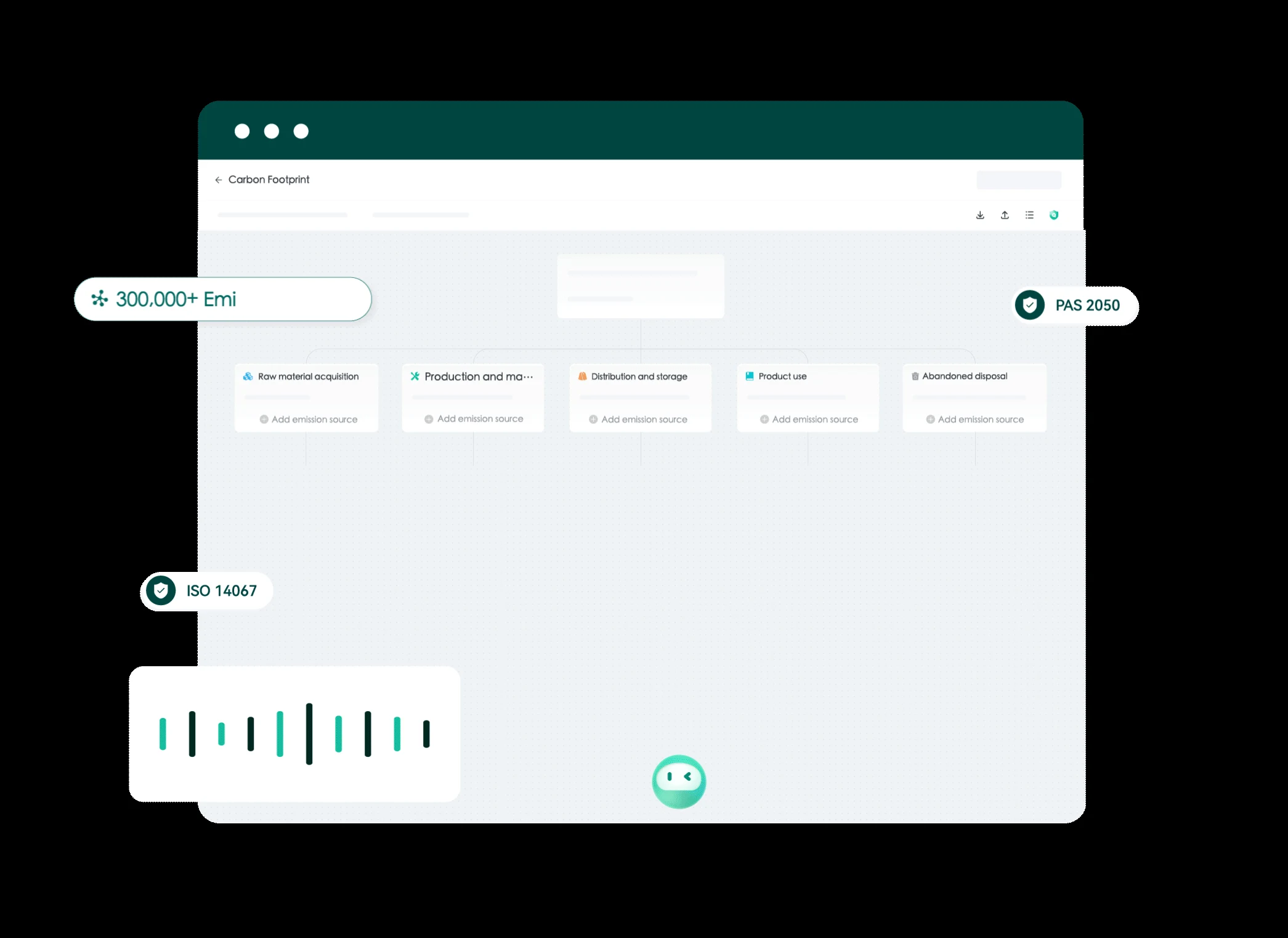
Product models become more useful when engineering can recognize the manufacturing process inside them. We suggest starting with a representative product and mapping its materials, conversion steps, packaging and relevant transport. List process losses separately from final product mass. Check whether outsourced processing is included in a purchased component dataset or needs separate treatment. The objective is a model that a production manager can explain, rather than a carbon number detached from how the product is made.
Before comparing design options, keep the basis consistent. A lighter part may have a different service life, yield or production route. A recycled input may come from a different geography or require different processing. The GHG Protocol Product Standard describes product life cycle accounting and highlights the need for more specific product rules when making comparisons. Our recommended review therefore includes performance equivalence, model boundaries and uncertainty. Treat an early scenario as a decision aid; do not turn it into a public superiority claim without checking the supporting method and evidence.
Ask suppliers for information they can provide
A long questionnaire is not always a better questionnaire. For an initial supplier exercise, we recommend identifying the few missing inputs most likely to affect your assessment. A metal supplier might need to clarify production route and geography. A component supplier might need to explain the boundary of an existing footprint. A contract processor might need to distinguish your production activity from its entire site. Tailoring the request reduces ambiguous answers and helps purchasing teams explain why the data matters.
Ask for source documents, reference periods and units alongside numerical values. If a supplier provides a product footprint, request the product identity, boundary, method and any review information. Do not assume two footprints are interchangeable because their units look similar. Where primary data is unavailable, record the reason for choosing a secondary factor and the limitation it introduces. China Carbon Database provides emission factor resources, including China-focused data. The right factor still requires a match to the activity, geography, period and intended calculation.
Evaluate software with a real factory workflow
Carbonstop describes Ccloud as a platform for corporate and product accounting, supported by software and consulting expertise. Available delivery approaches include SaaS, customized software and on-premises deployment. These options are a starting point for scoping, not a promise that every factory system is already connected. Bring a sample production file, an energy invoice and a product bill of materials to the discussion. Ask how the proposed scope would handle their specific structure, units and review requirements.
For an evaluation, we recommend following one record from its original evidence through factor selection, calculation and reporting. Ask who approves a correction and how a changed input affects the result. Discuss data access, export needs, deployment constraints and the responsibilities of your internal team. Carbon Agent is relevant where document parsing and assisted model preparation are part of the brief; its suggested inputs and factors still need professional review. A useful demonstration makes uncertainty and human decisions visible, alongside the final dashboard.
Connect hotspots to practical operational decisions
Once the baseline is understood, bring the results back to plant operations. Our suggested review separates high-emission activities from actions the company can realistically influence. A material hotspot may call for a supplier conversation or design investigation. A utility hotspot may call for a closer look at production scheduling, equipment operation or metering. An apparent transport hotspot may first require better shipment data. Investigation is part of the work; the first chart does not establish the best investment.
For each proposed action, record a responsible owner, the technical constraint, the information still needed and the basis for evaluating progress. Compare scenarios using consistent assumptions and distinguish estimated benefits from measured changes. If output rises, examine both total emissions and an appropriate production-related indicator so that the interpretation is clear. Carbonstop's consulting services include carbon accounting, reduction planning and supplier engagement. The specific work package should connect those services to the decisions your manufacturing team needs to make, with agreed deliverables and review responsibilities.
Prepare an assessment brief before requesting a proposal
A useful inquiry names the business objective, the facilities or products involved, the reporting period and the requested output. Include customer templates if they drive the project. Explain which data is already available and which departments control it. If a third party will review the result, identify that review expectation early. Software configuration, data preparation, consulting and independent verification are different activities; a proposal should state which are included.
You do not need a complete inventory before starting the conversation. A sample bill of materials, a facility list and a description of the buyer request can be enough to discuss scope. We recommend agreeing acceptance criteria before expanding the project: traceable inputs, documented assumptions, a reproducible calculation basis and outputs your team can use. Contact Carbonstop with that brief to discuss an appropriate software, data or consulting route. Delivery timing and fees depend on the agreed assignment and the readiness of your information.
Questions, answered.
Should a manufacturer start with corporate or product accounting?
Start with the decision driving the request. A company baseline calls for an organizational inventory, while a customer request for a specific component calls for a defined product study. Shared records can support both, but boundaries and allocation choices need separate attention.
Can we begin with incomplete factory data?
Yes, an initial scoping exercise can identify available evidence and missing inputs. We recommend documenting estimates and prioritizing the gaps that matter most. The proposed assignment should explain how missing information will be handled and what limitations remain in the result.
Does purchasing software provide third-party verification?
No. Software, consulting review and independent verification are different services. If your buyer requires an independently verified result, include that requirement in the brief and agree the relevant assessment and verification arrangements before work starts.
- Carbonstop Ccloud: accounting capabilities and delivery approaches ↗
- Carbonstop China Carbon Database ↗
- GHG Protocol Corporate Standard ↗
- GHG Protocol Product Standard ↗
Product information reviewed October 2026. Discuss project scope and current availability with our team.