
A platform for connected carbon work
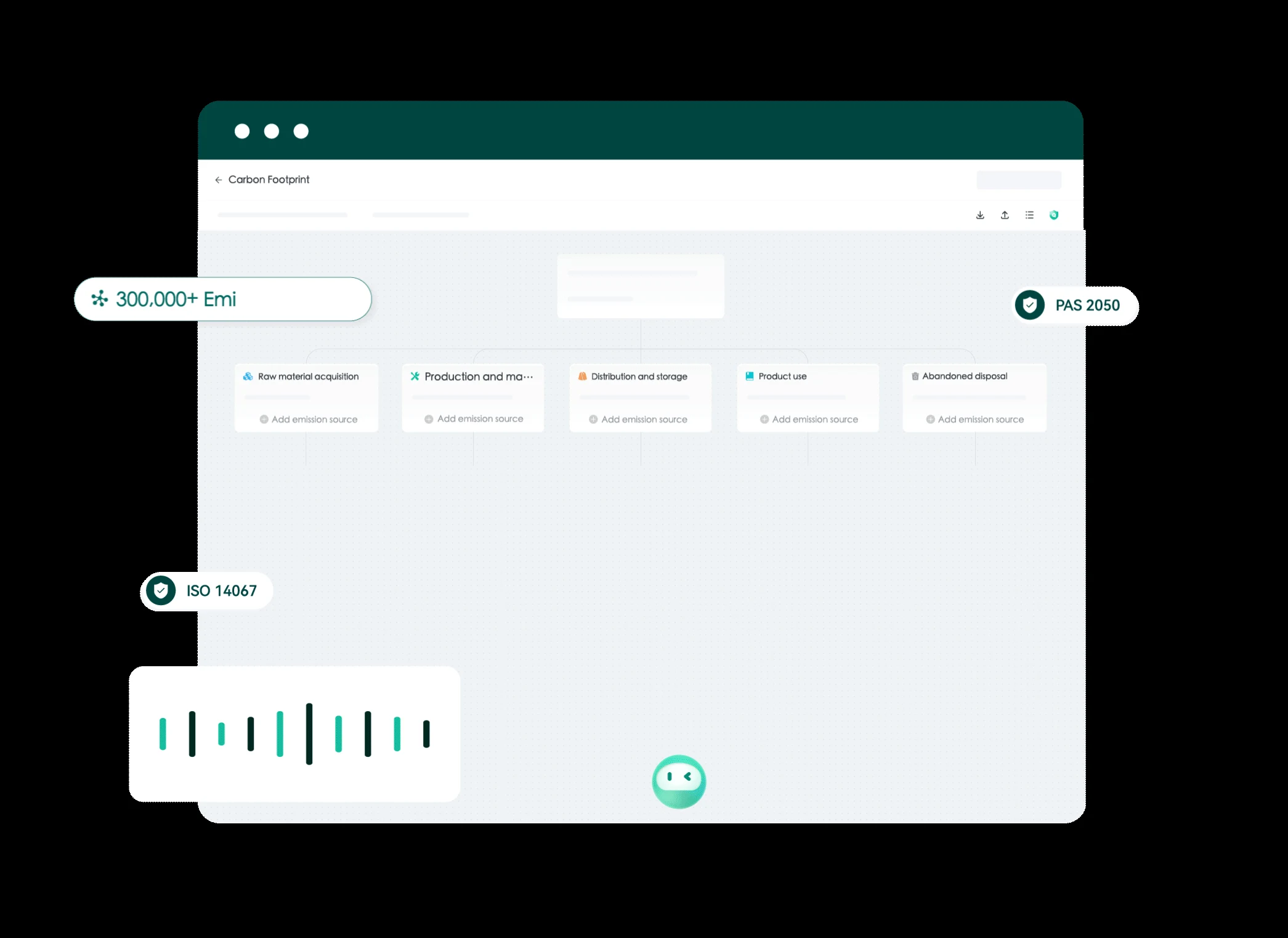
Ccloud brings corporate and product carbon accounting into a broader management environment. Carbonstop describes a service model supported by its research and development team and carbon consultants, so the buying conversation can cover both software and the accounting work around it. The platform's published positioning also includes industry benchmarking and AI support for reduction planning and disclosure. Specific modules, configuration and service deliverables should be confirmed against your requirements during scoping.
For a manufacturer, the first conversation may begin with a buyer asking for the footprint of a particular item. A group sustainability team may instead need consistent information from several operations. These are different starting points. Our recommendation is to name the immediate decision, identify who will use the result and decide what must be reviewed before it leaves the organization. That makes a demonstration more useful than a tour of every screen. You can assess whether the proposed setup addresses an actual workflow, rather than choosing software from a long feature list.
Corporate inventories and product footprints need distinct briefs
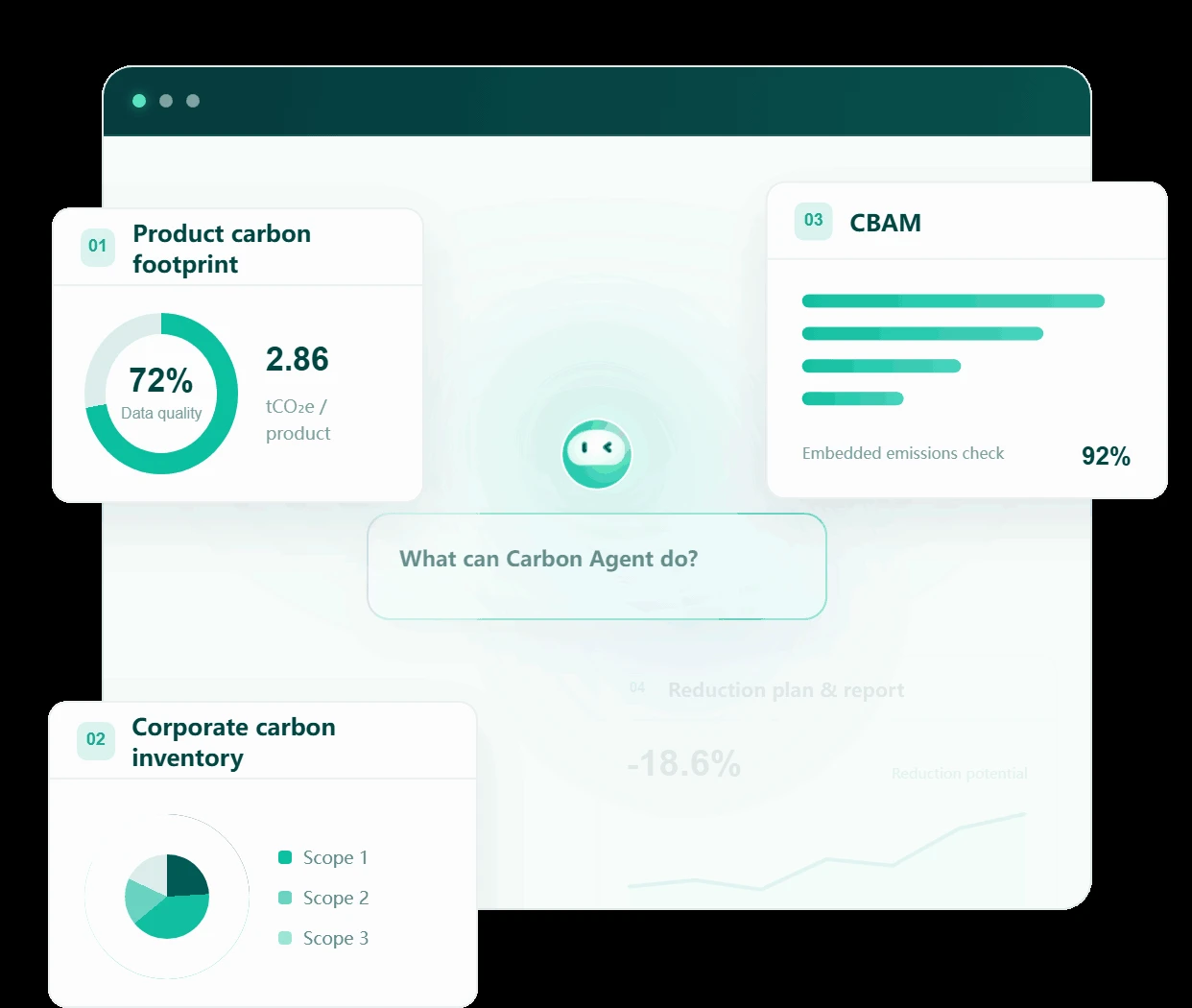
Ccloud's published scope covers corporate and product accounting. When evaluating that scope, prepare separate examples for the two tasks. For a corporate inventory, describe the entities, locations and reporting period you want the project to address. For a product footprint, describe the product, the intended use of the result and the activities you expect to include. Ask the project team to explain how those choices affect the data request and the proposed model.
This is practical preparation, not an assertion that every possible reporting framework is included in a standard subscription. A customer questionnaire, an internal management report and a public product claim can demand different evidence. Bring the actual request whenever possible. If several departments own the information, nominate a person who can resolve conflicts between their records. A purchase quantity and a production quantity may refer to different periods or processes; the accounting team needs that context before deciding how either number should be used.
Where the accounting scope is still uncertain, explore our carbon management consulting services alongside the software discussion. Defining a workable first project can be more valuable than attempting every reporting requirement at once.
Use document parsing as the start of a reviewable workflow
Ccloud includes AI-supported document parsing and data aggregation. The purpose is to help turn source information into material that can support corporate or product models. For buyers, the useful question is how a proposed workflow handles the documents your organization actually receives. Ask for a demonstration using an approved sample that resembles your invoices, energy records or production information, rather than relying only on a polished example prepared in advance.
During that evaluation, compare extracted values with the original record. Check whether the unit, reporting period and description have been understood as you intended. A readable number does not necessarily carry enough context to support a calculation. Your team should agree who resolves uncertain entries, who supplies missing information and who approves the final dataset. These are recommended operating decisions; they should be discussed explicitly with the delivery team.
Keep the first sample manageable. Include a straightforward document and another that reflects a recurring difficulty, such as mixed units or an unclear item description. The objective is to understand the review effort that your users will face. AI assistance is most useful when the people responsible for the result know where to intervene and what evidence they need to inspect.
Connect factor selection to the question being answered
Ccloud's AI capabilities include factor matching, supported by Carbonstop's data resources. The related CCDB emission factor database is worth reviewing if your evaluation centers on the suitability of data for operations or suppliers in China. A database and a management platform serve related purposes: one helps you examine the underlying data options, while the other supports the wider accounting and management task.
For procurement, request a walkthrough of a factor choice relevant to your business. Ask why the proposed record fits the activity, what assumptions remain and how the team would handle a missing match. Consider geography, the period represented, the unit and the process description as review questions. These are suggested checks for your project, not a claim that any record will fit every use case.
A useful acceptance discussion also covers changes. If the selected data or an underlying assumption changes later, decide how your team wants that decision documented and communicated. The goal is to make future comparisons understandable. A smaller, well-explained starting inventory can be more useful for management than a large set of numbers whose selection logic nobody can reconstruct.
Turn analysis into decisions your teams can own
The official Ccloud description includes benchmarking, emission reduction planning and AI-assisted disclosure reporting. These capabilities can support the discussion after an inventory is prepared: where to investigate, which potential actions deserve closer assessment and what information should be assembled for reporting. The output still needs professional review and business context. Software-generated recommendations are not a substitute for a decision about operational feasibility, investment or reporting responsibility.
For an effective evaluation, choose one decision that would matter to the business. You might ask the demonstration team to explain how an emissions driver is identified, then discuss what additional information would be needed before changing a process or engaging a supplier. Ask your operations and procurement colleagues to attend that part of the demonstration. They can identify constraints that a sustainability team may not see in a spreadsheet.
Treat benchmarking with similar care. Before using a comparison in management communication, ask whether the boundaries, time periods and underlying assumptions are sufficiently comparable for the intended purpose. A useful comparison should lead to a better question, not an unsupported claim about leadership. For reporting, agree who checks the narrative against the approved figures and who signs off any external statement.
Choose the delivery approach around your organization
Carbonstop offers Ccloud through SaaS, custom software and on-premises delivery. That gives enterprise buyers several starting points for a scope discussion. It does not mean that every capability, integration or operating arrangement is identical across those options. Ask for a proposal that identifies what is included, what requires configuration and what needs separate development or service support.
We recommend involving your IT and procurement teams before making a delivery decision. Describe where your source records live, the internal policies that apply to them and the users who will need access. If you expect data to move between systems, provide the source systems and desired exchange format as requirements. Do not assume that an integration is available simply because another enterprise uses the same software category.
The same care applies to ongoing responsibilities. Discuss how your team will request support, what happens when a reporting requirement changes and how proposed changes will be evaluated commercially. Confirm data handling, retention and access arrangements in the project documentation. These questions make the eventual agreement clearer; they are not implied service commitments or published technical specifications.
A practical demonstration and pilot brief
A strong demonstration brief is short enough for the delivery team to act on and specific enough to expose the difficult parts of your work. Describe your organization, the first accounting task, the intended audience for the result and the date by which you need a usable deliverable. Add a small sample of data that you are authorized to share. Remove personal or commercially sensitive information where it is unnecessary for the evaluation.
For a pilot, our recommendation is to define acceptance in terms of a reviewable result. Ask the team to show the route from selected records to the model, explain unresolved assumptions and identify the work still required before wider use. The pilot should also help you understand what your own staff must contribute. A technically convincing demonstration can still leave an organization unprepared if no one has been assigned to supply or approve the inputs.
Compare proposals on the same brief. Request clarity about software access, consulting scope, configuration, data preparation, training expectations and any separate assurance activity. Prices and implementation schedules should follow that agreed scope. Neither is specified here because the correct proposal depends on the work your organization actually needs.
- Identify the first corporate inventory or product footprint to evaluate.
- Nominate the owners of source data, methodology decisions and final approval.
- List required deliverables and any customer instructions that govern them.
- Ask for a written distinction between included work and optional services.
Bring software and consulting into one scoped conversation
Carbonstop has provided carbon management software and consulting since 2011. Ccloud is one route into that broader offering. Organizations seeking a structured platform can discuss it alongside the more task-oriented Carbon Agent workflow, while teams that first need help defining an inventory can begin with consulting. The right entry point depends on the work, the available records and the experience of the people responsible for delivery.
Send a concise project outline through our contact page. Include your industry, the locations involved, the type of accounting you need and whether you have a preferred delivery approach. If the task comes from a customer or reporting program, mention that context. A clear brief helps the team discuss a relevant demonstration and identify questions that must be resolved before a commercial proposal can be prepared.
Plan a useful first conversation
| Bring to the discussion | What it helps clarify |
|---|---|
| Your business objective | Whether you need software, data, consulting or a combined approach |
| A representative data sample | The preparation and review work your project may need |
| Reporting audience and timing | Deliverables, responsibilities and the scope of a proposal |
Questions, answered.
Does Ccloud support both corporate and product carbon accounting?
Yes. Both are included in the published Ccloud scope. Your project still needs an agreed boundary, data plan and review process. Bring the intended use of each result to the demonstration so the team can explain the relevant workflow and confirm the proposed delivery scope.
Can Ccloud be delivered on premises?
Carbonstop lists SaaS, custom software and on-premises options. Discuss your infrastructure requirements, access arrangements and expected integrations with the team. The availability of a delivery option does not by itself establish a particular security configuration, hosting arrangement or integration commitment.
Does an AI-generated report guarantee certification or a disclosure score?
No. AI assistance can support the preparation of analysis and reports, but the result needs review. Certification, independent assurance and external scoring involve their own requirements and decisions. Confirm any related service separately and agree who is responsible for approving the final material.
What should we send when requesting a demonstration?
Send the accounting objective, your industry, the reporting period and a description of available records. Include any customer instructions and your preferred delivery approach. An authorized sample helps focus the conversation, but avoid sending confidential records until suitable data handling arrangements have been agreed.
Product information reviewed October 2026. Discuss project scope and current availability with our team.