
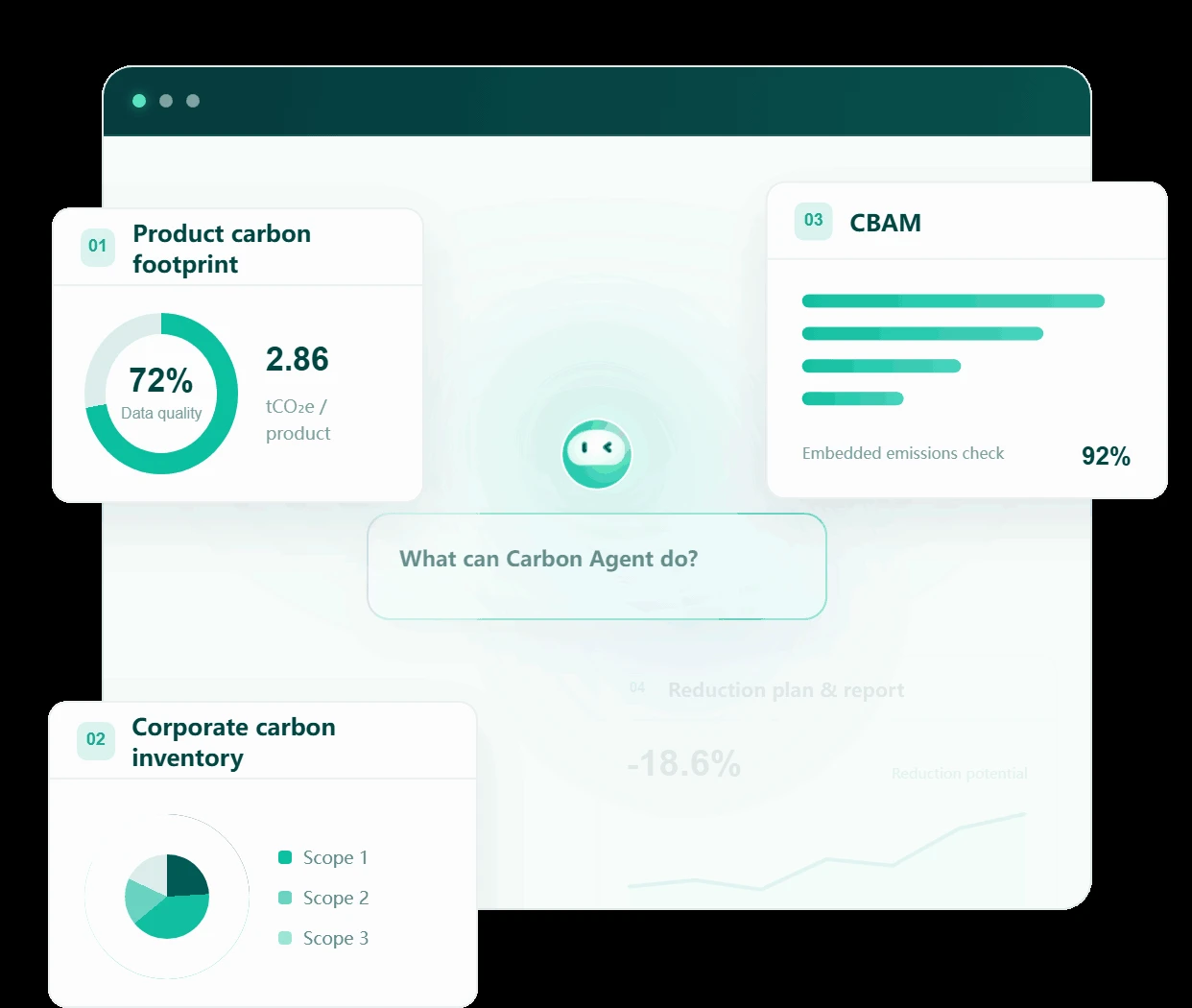
Start with a request that has a clear purpose
Carbon Agent's published workflow begins by interpreting a product, enterprise or compliance-related task and planning the work around it. It then selects the data and tools needed for the request. That task-oriented approach gives buyers a useful way to organize an evaluation: begin with a real objective and examine how the workflow develops, rather than testing a collection of disconnected prompts.
As a preparation exercise, write the request you would give to a colleague. Name the object of the study, the intended audience and the reason the work is needed. A request to investigate a product footprint for a customer discussion is more informative than a request to calculate carbon. Include the constraints you already know, and identify the questions you expect the project team to resolve.
This is recommended briefing practice, not a promise that every task can be completed from a sentence. The agent still needs relevant evidence, and your organization still needs to make decisions about the work. A useful demonstration should show which questions arise, what information is missing and when a person needs to confirm the next step.
Prepare source files before judging the output
The official product description lists PDFs, Excel files, images and bills of materials as inputs. It describes extracting fields, standardizing units, flagging missing or unusual data and retaining source traceability. Those capabilities are relevant to teams whose information arrives in different formats. To assess the fit, use a small selection of approved records that resembles your normal work and ask the team to demonstrate the process with that material.
Our recommendation is to inspect the extracted information before moving on to the model. Check the meaning of a quantity, the period it covers and whether a description refers to the item you intended. An invoice total, a purchased quantity and a production quantity answer different questions. Make the business context available to the reviewer instead of expecting the file alone to resolve every ambiguity.
Data preparation also needs ownership. Decide who can answer a question about a supplier record and who can correct a source value when a discrepancy appears. If a document is incomplete, preserve that fact in the project discussion. A well-run evaluation should reveal the remaining work, including the parts that cannot be settled by automated extraction.
Review factor recommendations before model confirmation
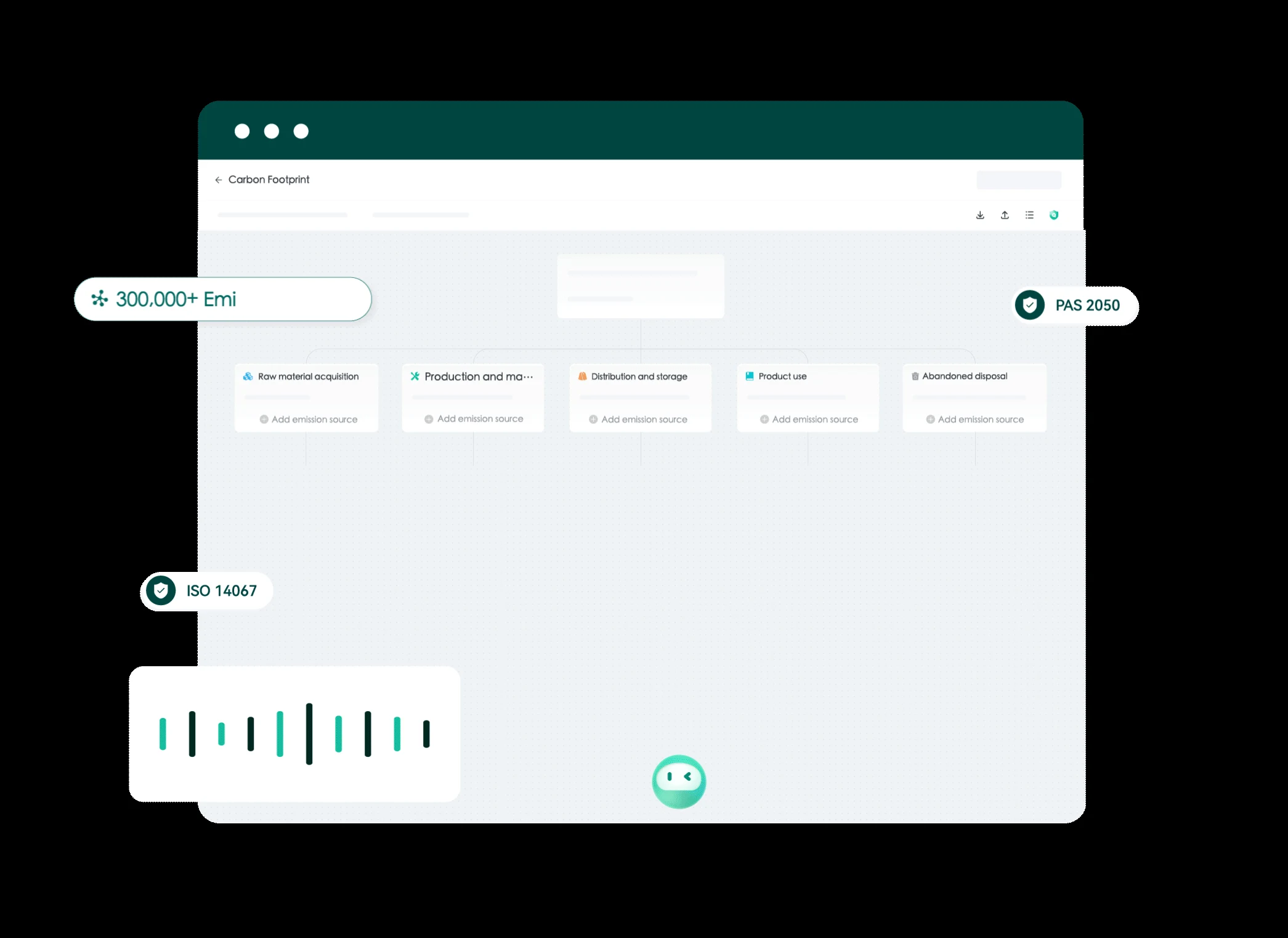
Carbon Agent recommends factors for material, energy, transport and process information, with source and version details. Its published sequence makes confirmation a step before model building. That distinction matters for procurement: the product is presented as a workflow with review points, not as a reason to accept every suggested match without examination.
During a demonstration, ask the team to explain a recommendation that is central to your task. Why is it relevant to the activity? Which assumptions affect the match? What information would change the choice? You can explore the related CCDB emission factor database if the underlying data coverage is a major buying criterion. Confirm the data access included in the proposed arrangement rather than assuming all related resources are automatically available.
For your internal process, nominate a person who can confirm the recommendation or seek additional advice. We suggest documenting the reason for a selection in terms that another reviewer could understand. If a factor remains uncertain, discuss how that uncertainty affects the intended use of the result. Confirmation should reflect a considered decision about fit, not merely the desire to reach the final report screen.
Make the model understandable to the people responsible for it
Once the relevant choices are confirmed, Carbon Agent's published workflow builds a product or enterprise carbon model. For an evaluation, ask the team to show how the model relates to the source records and the task you described. The useful output is not just a total. It is a result that the people responsible for it can explain, challenge and improve.
We recommend choosing a representative section of the model and tracing it back to the evidence. Ask how the activity was interpreted and where a reviewer needs to exercise judgment. Bring a colleague who understands the operation or product, because technical knowledge of the business can reveal a misunderstanding that looks perfectly reasonable in a table. A short, concrete walkthrough can be more informative than inspecting many outputs without context.
Agree the scope of the first model before discussing broader rollout. If the original request concerned one product or a selected reporting period, do not treat it as a complete account of everything the organization does. The evaluation should help establish what is covered, what remains outside the task and what additional evidence would be needed to extend the work.
Use questions and reports to support a business decision
Carbonstop describes follow-up questions, analysis of emissions drivers, development of reduction actions and report generation as part of the Carbon Agent workflow. These functions are useful areas for a demonstration because they show how the output can be explored after the initial calculation. Ask a question that a manager or customer would realistically raise and inspect the explanation that follows.
Our recommended test is to separate evidence from interpretation. Ask which part of an answer comes from supplied records, which part depends on a modeling choice and which part is a proposed action requiring further assessment. That distinction gives operational teams a clearer basis for deciding what to investigate. A suggested reduction measure still needs review for feasibility, responsibility and business implications before implementation.
Apply the same discipline to reports. Establish who will check the figures, who will review the wording and who can authorize external circulation. A report that is clear to an internal project team may still need additional explanation for a buyer or assurance provider. Agree those expectations during scoping so the final deliverable is evaluated against its intended purpose, not merely its appearance or length.
Keep expert review distinct from independent assurance
The official Carbon Agent workflow includes experts reviewing key data, boundaries and model outputs, with comments and revisions recorded. It also describes connecting with third-party assurance providers. Expert review and independent assurance are different activities. A software-assisted workflow or an internal expert checkpoint does not by itself mean a result has received independent assurance, certification or regulatory acceptance.
For procurement, request a clear description of the review work included in your proposal. Ask who will review the task, which outputs they will examine and how questions will be resolved. If you need a separate assurance engagement, identify that requirement at the beginning and discuss it with the appropriate provider. The expected evidence and final deliverables should be explicit rather than inferred from a product description.
Your own organization also needs a named approver. A consultant can help examine an accounting decision, but your team must still explain the business context and authorize the use of its information. We recommend identifying those responsibilities before the first data submission. That creates a workable route for handling uncertainty when the workflow reaches a decision that cannot be resolved automatically.
Evaluate the workflow with a bounded pilot
A useful pilot should be small enough to inspect in detail and realistic enough to expose the work your team actually faces. Choose a task with accessible records and a clear intended output. Include an example of a recurring difficulty, such as an incomplete description or mixed units, and ask the team to explain how that issue is identified and handled. This is a suggested evaluation approach, not a published implementation schedule.
Agree what you want to learn before starting. You may need to understand the quality of extraction, the clarity of factor recommendations, the review workload or the usefulness of the final report. Ask for acceptance criteria connected to those questions. Avoid using an unsupported speed or accuracy target as a substitute for examining the result. There is no project-specific performance guarantee on this page.
The commercial scope should identify software access, expert services and any additional support required for the pilot. Confirm data handling arrangements before sharing sensitive material, and discuss whether the chosen records can be used in a demonstration. If the evaluation points toward a recurring enterprise program, compare the proposed approach with Ccloud's broader carbon management platform.
- Select one task with a defined audience and intended deliverable.
- Provide authorized examples of the records your team actually uses.
- Assign owners for data corrections, factor confirmation and output approval.
- Separate software evaluation, expert review and independent assurance requirements.
Discuss the next carbon task with the right context
Carbon Agent is a relevant option when your evaluation focuses on moving from a request through records, recommendations and a reviewed output. Some organizations will need a broader platform discussion, while others will first need help defining the accounting scope. Carbonstop also provides carbon management consulting services, so the conversation can begin with the task rather than an assumed software package.
Use our contact page to describe your intended project. Include the product or organization involved, the available file types, the audience for the result and any external instructions you need to address. Mention whether you are exploring a pilot, a recurring workflow or a separately assured deliverable. The team can then discuss the relevant demonstration and clarify the work that would need to be included in a proposal.
Plan a useful first conversation
| Bring to the discussion | What it helps clarify |
|---|---|
| Your business objective | Whether you need software, data, consulting or a combined approach |
| A representative data sample | The preparation and review work your project may need |
| Reporting audience and timing | Deliverables, responsibilities and the scope of a proposal |
Questions, answered.
Which file types does Carbon Agent support in its published workflow?
The official description lists PDFs, Excel files, images and bills of materials. Ask for a demonstration using an authorized sample of your records to assess how the workflow handles your specific layout, terminology and data quality. Support for a file category does not guarantee that every document will be interpreted without review.
Does Carbon Agent select factors without human confirmation?
The published workflow recommends factors with source and version details, then builds the model after confirmation. Establish who will review those recommendations in your project and how uncertain matches will be resolved. The confirmation step is part of a responsible evaluation, not an administrative formality.
Is expert review the same as third-party assurance?
No. Expert review examines decisions and outputs within the workflow. Independent assurance is a separate activity with its own scope and provider. If you need an assured or certified deliverable, state that requirement early and confirm the arrangements separately rather than assuming they are included in software access.
What is the best starting point for an enterprise demonstration?
Choose a specific product or corporate task with records you are authorized to share and a clear intended audience. Explain what is difficult about the current process. A focused example lets the team demonstrate extraction, recommendations and review decisions that matter to your organization.
Product information reviewed October 2026. Discuss project scope and current availability with our team.