

Define the food product before collecting numbers
A food product is more than its recipe. The assessment brief should describe the product format, quantity, packaging, production location and intended life cycle boundary. State whether the work concerns a bulk ingredient, a packaged retail unit or another clearly defined output. If the purpose is a buyer response, obtain the buyer's requested fields and methodology before deciding how to structure the study. A company inventory and a product footprint can use some of the same records while answering different questions.
We recommend involving product development, manufacturing, procurement and sustainability in the initial scope discussion. A recipe change, a supplier substitution or a different storage requirement can affect what information the study needs. The GHG Protocol Product Standard addresses life cycle emissions and explains the role of product rules in comparisons. Use that distinction when planning any comparative work. A result for one serving, one package or one mass unit should never be compared casually with a result expressed on another basis.
Prepare ingredient data with sourcing context
Begin with the ingredient specification and production recipe, then check whether the recorded quantities represent inputs or finished output. Moisture changes, processing losses and rejected batches can complicate a simple mass comparison. We suggest keeping those transformations visible in the model. For each ingredient, record the supplier, available origin information, relevant specification and the evidence supporting the quantity. Where sourcing varies, explain whether the study represents a particular supplier, a weighted mix or a documented approximation.
Supplier-specific information may be useful, but its boundary and method still need review. A factor describing a raw agricultural commodity may not represent a processed ingredient delivered to your factory. If secondary data is needed, document the match and its limitations. China Carbon Database provides emission factor resources, including China-focused data and scenario descriptions. It supports research rather than removing judgment: the calculation team must still decide whether a dataset represents the ingredient, geography and processing stage relevant to the study.
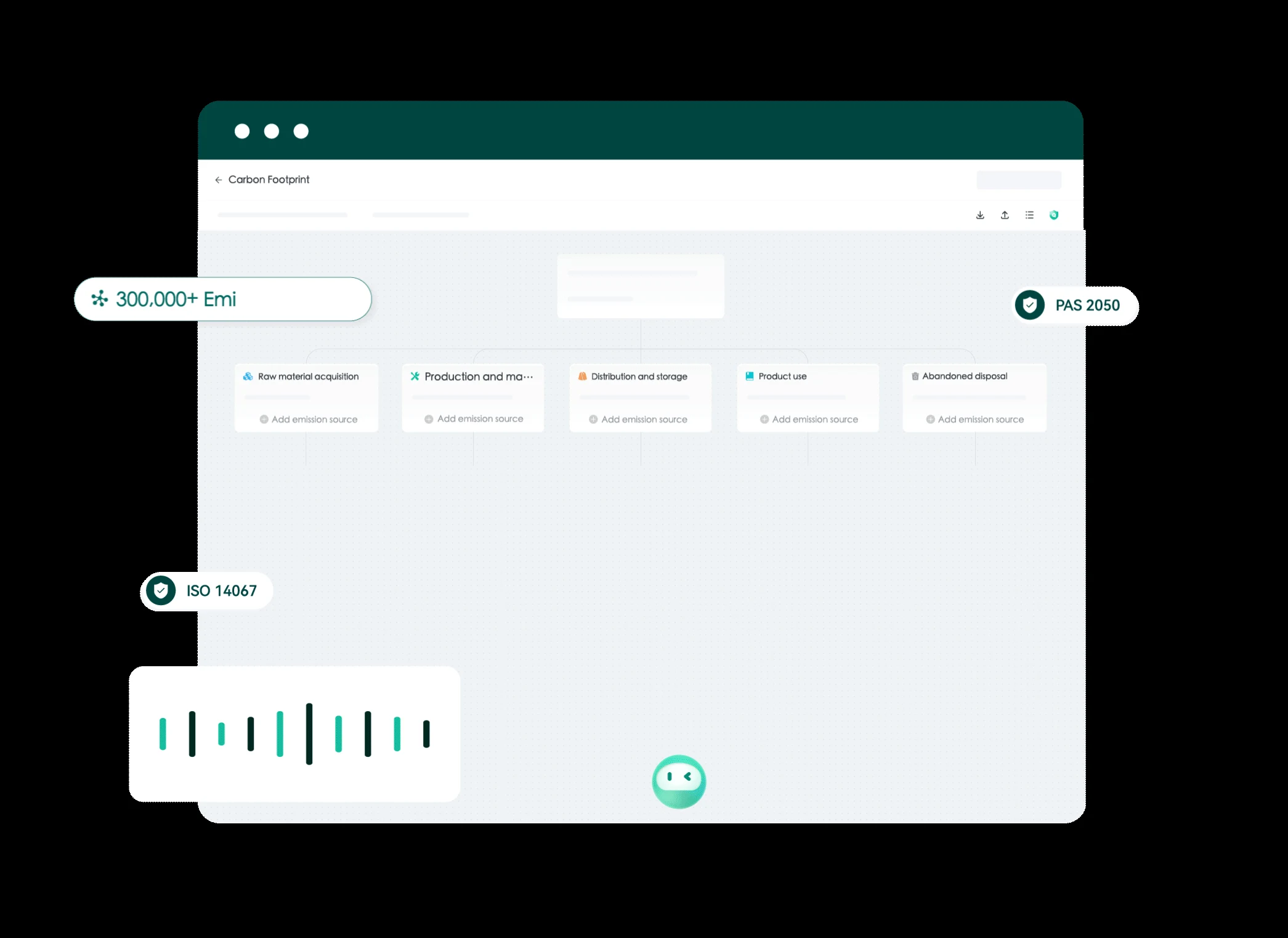
Connect factory utilities to production realities
Processing records should describe what happens between ingredient receipt and the finished product. Depending on the operation, relevant activities may include heating, cooling, cleaning, mixing, drying or other conversion steps. Our recommended approach starts with a process map and the utility records already available, then identifies the information needed for the chosen scope. A site-wide energy total may support a corporate inventory, while a product study may need a justified allocation across lines or products.
Ask production teams to explain seasonal changes, shared equipment and differences between normal and exceptional operation. Identify how waste, by-products and rework are recorded and agree their treatment with the assessment team. Do not hide a difficult allocation decision inside a default spreadsheet formula. Keeping the reasoning visible makes future updates easier when production volumes or recipes change. It also helps your team distinguish a genuine process improvement opportunity from a result that is sensitive mainly to an uncertain allocation or an incomplete record.
Keep packaging, storage and distribution in the agreed scope
Packaging and distribution should be treated according to the study boundary, not included or excluded because the data happens to be convenient. We recommend listing the package components and identifying relevant storage and transport stages at the beginning. A chilled product, a frozen product and a shelf-stable product can require different information. Describe the scenario being assessed and keep any assumptions about storage duration, transport or use visible to the reviewer.
For packaging choices, consider the service the package provides as well as its material mass. A proposed change may affect protection, shelf life or handling, and those questions belong in the design discussion before a carbon comparison is used commercially. Treat exploratory scenarios as internal decision support until the evidence and comparability have been reviewed. Carbonstop's consulting services include product carbon accounting and reduction planning; discuss whether the assignment should focus on a specific product study or a broader investigation across ingredients, processing, packaging and distribution.
Choose software around the recurring work
Carbonstop's Ccloud platform includes corporate and product carbon accounting, with SaaS, customized software and on-premises delivery approaches available for discussion. A food or beverage business should evaluate those options against its own workflow: recurring product updates, supplier information changes, site reporting or customer questionnaires. Bring a representative recipe, a utility record and an example of the report you need. Ask how the proposed scope handles version changes and review responsibilities.
Where source documents are fragmented, Carbon Agent offers assisted parsing and model preparation capabilities. The practical evaluation should examine whether quantities, units and ingredient descriptions have been interpreted correctly. Suggested factors and models need professional confirmation. We recommend identifying who can approve a recipe assumption, who owns supplier follow-up and who reviews the final narrative. Software can support the work, but the procurement discussion should state which data preparation and technical review activities remain with your team and which are included in the service.
Use results carefully in product and buyer communication
A credible buyer response explains the result's basis. We suggest including the product identity, unit, boundary, reference period, method and major assumptions alongside the footprint. If the result has been independently reviewed, describe that review accurately; internal expert review is a different activity. Avoid turning an initial estimate into a broad claim about the entire brand or product range. Commercial teams need to understand what the study supports before using its figures in presentations or packaging discussions.
When exploring improvements, keep the baseline and proposed scenario comparable. Identify whether the change concerns an ingredient, production process, energy input, packaging specification or distribution assumption. Record which changes have been implemented and which remain exploratory. An estimated reduction is not a measured result. Our recommended project scope includes a short explanation for the teams that will communicate the findings, so that the technical study and the customer-facing wording stay connected. Any certification or independent verification requirement should be agreed separately rather than inferred from completion of the calculation.
Bring a focused brief to the first conversation
Your inquiry can start with a product description, recipe or ingredient breakdown, production location, packaging details and the business reason for the assessment. Add the requested reporting period and any buyer template. Explain whether the same product is made at several sites or with changing suppliers, since these choices affect the model and data work. If some information is commercially sensitive, identify access constraints before sharing detailed records and agree an appropriate working arrangement.
We recommend a representative pilot when the eventual goal is to cover a broad portfolio. Choose a product that exposes the main data challenges, then agree how the model and collection process will be reviewed before expansion. Contact Carbonstop to discuss a combination of software, factor data and consulting suited to that brief. The proposal should define deliverables, responsibilities and any review requirements. Timing depends on the agreed scope and evidence readiness; a product footprint project should not begin with an unsupported promise of a particular reduction or buyer outcome.
Questions, answered.
Can we start with one product before assessing the full range?
Yes. A representative product can help test data availability, model choices and the review process. We recommend selecting it for the questions it reveals, then agreeing which parts of the approach can be reused across other recipes, sites or packaging formats.
What happens when ingredient origins change?
Record the change and review whether the existing data still represents the product. The assessment may need a revised sourcing mix or updated factor assumptions. A recurring workflow should define who owns these updates and when a model needs review.
Does a product footprint prove a low-carbon marketing claim?
A footprint provides a result within a defined boundary and method. A comparative or wider marketing claim requires its own evidence review, including a suitable comparison basis. Calculation, expert review and independent certification should not be treated as the same activity.
- Carbonstop Ccloud accounting platform ↗
- Carbonstop product and enterprise accounting ↗
- GHG Protocol Product Standard ↗
Product information reviewed October 2026. Discuss project scope and current availability with our team.