
Start with the reporting job
Write a short brief that describes the decision or disclosure the project must support. Identify the reporting entity, facilities, countries, reporting period and intended audience. Separate a corporate inventory from a product footprint. GHG Protocol publishes distinct corporate, value chain and product standards, so the name of a standard alone is not a complete statement of work. Link the brief to the actual report, customer questionnaire or internal management decision you need to complete.
Then list the people who will supply, check and approve information. A sustainability team may own the final inventory while finance provides invoices and operations provides meter readings. Ask each department what records already exist. This exercise gives vendors a more useful basis for estimating implementation effort than employee count alone. Treat uncertain requirements as open questions in the brief so suppliers can state assumptions instead of silently pricing different projects.
Separate subscription from implementation
Request separate line items for platform access, initial configuration, historical data preparation, training and ongoing support. Ask which items recur and which are charged once. Where a proposal uses a bundled total, request a written description of the included work and the conditions that trigger additional charges. A clear scope is more useful than a low headline figure that leaves data cleanup and report preparation undefined.
Carbonstop describes Ccloud as a carbon management platform with SaaS, customized software and on-premises delivery options. Those delivery routes are reasons to discuss scope, rather than evidence that they share the same commercial terms. Review the Ccloud platform and ask for a proposal tied to your preferred deployment. If your team needs help defining boundaries or interpreting results, discuss that work through carbon management services as an explicit deliverable with named review responsibilities.
Estimate the work hidden in your data
Prepare a small, representative data sample before requesting final proposals. Include a clear electricity invoice, an incomplete fuel record, a purchasing export and an example with an unfamiliar unit. Remove confidential information where necessary. Ask vendors to explain what must happen before each record becomes usable: extracting values, converting units, identifying the reporting period, selecting a factor and obtaining approval. Record which steps your team would perform.
The sample should expose exceptions as well as clean data. For example, a supplier file might combine several facilities or omit the year to which a footprint relates. Those problems require interpretation and follow-up, even when document processing is automated. In the quotation, identify who contacts suppliers, who resolves conflicting records and who approves assumptions. Budget internal staff time alongside vendor fees. A cheaper contract may still require more internal coordination if those responsibilities are left with the buyer.
Ask how database access is licensed
Emission factor access deserves its own procurement questions. Ask what datasets are available for your relevant geographies, processes and reporting periods, and whether the proposed license covers the ways you intend to use them. Clarify access after the subscription ends, the ability to retain calculation evidence and any restrictions on redistributing source data to customers or reviewers. Do not assume that access to a platform grants unrestricted rights to every underlying dataset.
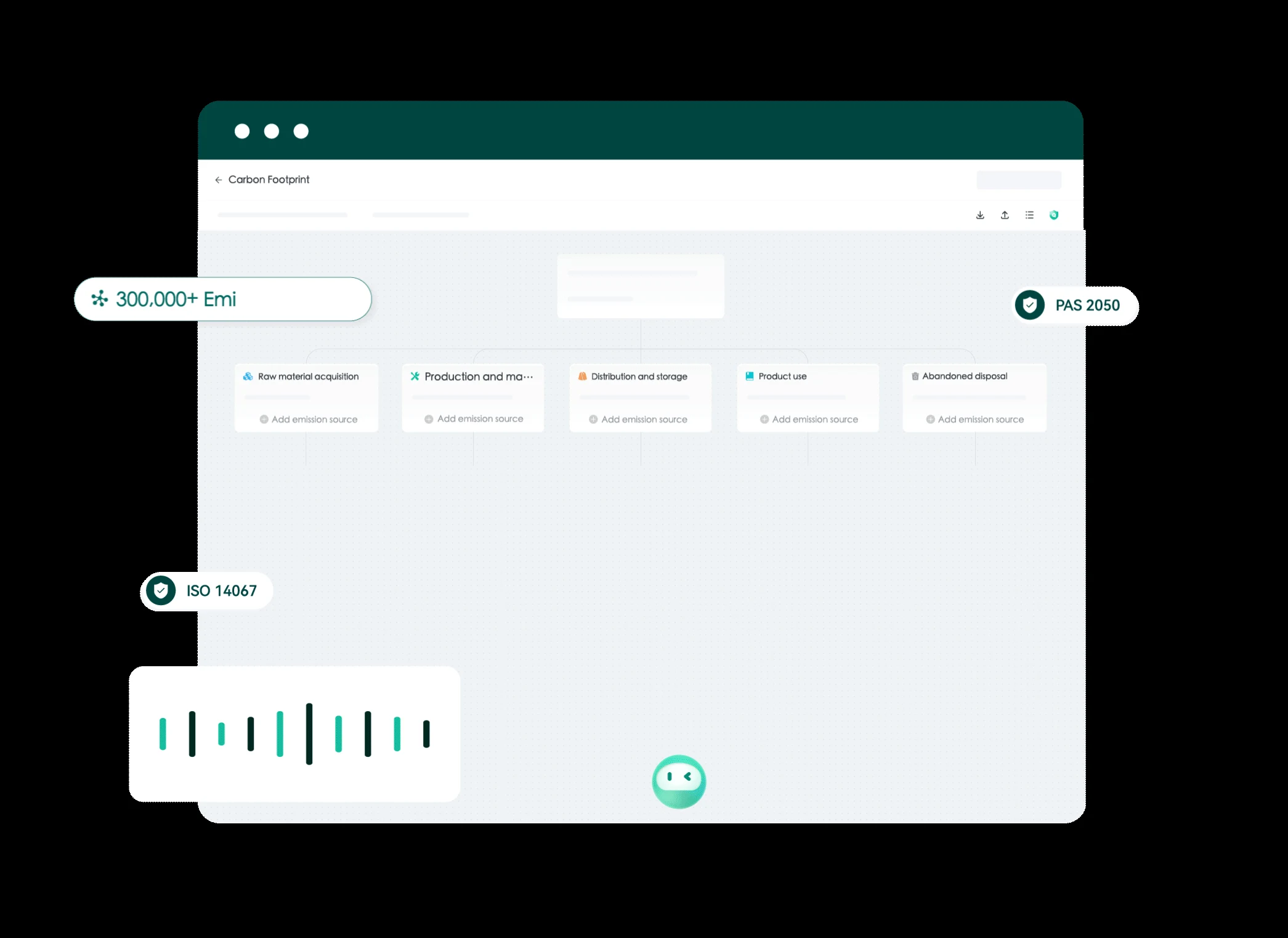
Carbonstop presents CCDB as a database with more than 300,000 emission factors and coverage across more than 200 countries and regions. Those published coverage figures are a starting point for a sample search, not proof that every required process is represented. Review CCDB emission factor data and give the team a shortlist of materials, fuels and transport activities to examine. Ask the quotation to identify any separate data access charges and the process for handling an important coverage gap.
Make implementation acceptance concrete
Define acceptance using work your team can inspect. Suggested milestones include an agreed inventory boundary, a completed sample calculation, a reviewed factor register and a draft report that links back to supporting evidence. These are procurement suggestions, not statements that a particular product automatically produces every artifact. Ask the vendor to confirm which milestones it will deliver and what input it needs from you at each stage.
Include a realistic exception in the demonstration. Have a reviewer question a unit conversion or replace a provisional assumption, then inspect how the final result and supporting documentation are updated. Ask how disagreements are resolved and who has authority to approve the completed work. If an external reviewer will be involved, invite that reviewer to comment on the proposed evidence package before contracting. This can prevent a mismatch between what the implementation delivers and what the later review expects.
Compare renewal and expansion conditions
Ask what changes the annual charge. Possible commercial variables to clarify include additional entities, users, sites, product studies, datasets, storage or service hours. The purpose is to discover the actual pricing basis in the proposal, not to assume all vendors use those measures. Request a written process for adding scope so your team can evaluate future requirements without rebuilding the commercial discussion from scratch.
Also discuss what happens when a project pauses or the agreement ends. Ask about export formats, access to historical calculations, assistance with migration and retention of supporting records. Include any agreed conditions in the contract rather than relying on a demonstration conversation. Your comparison sheet should distinguish confirmed terms from unanswered questions. A proposal with a higher initial price may include work another excludes, but that difference should be demonstrated through the scope rather than inferred from the total.
Use a consistent quotation checklist
Send the same request to every shortlisted provider and allow each to flag assumptions. Ask for an implementation plan based on your sample data and named internal owners. Identify the reporting outputs, review rounds, training audience and support arrangements you expect. If a deadline matters, share the date and ask what dependencies could affect delivery; do not treat a generic timeline as a commitment for your project.
When proposals arrive, compare included deliverables before comparing totals. Mark any item that is optional, dependent on further discovery or priced separately. Ask follow-up questions in writing and keep responses with the final scope. This creates a record that procurement, sustainability and finance can use together. It also makes it easier to explain why one proposal fits the project better without reducing the decision to a feature count.
- Reporting entities, periods, product studies and intended outputs.
- Data preparation responsibilities and exception handling.
- Deployment, data licenses, training and service scope.
- Acceptance criteria, renewal terms and export arrangements.
Prepare a useful first discussion
Bring a scope brief, a sample dataset and a list of unresolved decisions to your initial conversation. Explain whether you already have a methodology owner and whether an independent review is planned. If you are starting from an incomplete inventory, say so. The first proposal can then distinguish discovery work from implementation instead of treating unknown data quality as a hidden assumption.
Use the contact page to discuss a Carbonstop quotation. Ask the team to identify the platform, data and professional services relevant to your brief and to confirm exclusions. Keep the purchase decision tied to the work you need: a usable inventory, a repeatable process and evidence that your reviewers can follow. No public price range is supplied here because the available project sources do not establish a current, comparable Carbonstop pricing schedule.
Questions, answered.
Is there a published Carbonstop software price in this guide?
No. Request a scoped quotation identifying delivery mode, data access, implementation services and renewal terms. This guide does not invent a subscription price or a savings estimate.
Should consulting be included in the software proposal?
Include it when your team needs methodology, boundary, data or reporting support. Ask for the consulting deliverables and responsibilities to be stated separately so the scope remains clear.
Does buying software include independent assurance?
Do not assume that it does. Ask who performs any review, whether it is independent and what engagement is actually included. Platform access and expert support are not by themselves an assurance opinion.
- Carbonstop: Ccloud delivery and platform overview ↗
- Carbonstop: CCDB coverage and data overview ↗
- GHG Protocol: Standards and guidance ↗
Product information reviewed October 2026. Discuss project scope and current availability with our team.